Overview
Walk into an Ayurveda clinic today with a screenshot of a weight-loss bottle and you will hear the same question in a dozen forms: will these drops actually move the needle? Agni Drops for weight loss sit where two things Indians genuinely trust meet — Ayurveda and simplicity — and that is exactly why they deserve a careful, honest look rather than a sales pitch.
Here is the catch. Agni is a real and central concept in Ayurveda, but the products sold under that name vary widely in formulation, quality and evidence. Some are prepared by practising doctors; others are white-labelled and sold on marketing language alone. A few drops in warm water cannot undo a routine working against you — but a well-made formulation, used correctly and consistently, can support the digestion and metabolism work your body is already trying to do. Here is what to know before you buy.
TL;DR / Quick Answer
Agni Drops for weight loss are liquid Ayurvedic herbal concentrates designed to support digestive fire, metabolism and the gradual reduction of belly weight — a support tool, not a fat-burning shortcut. Evidence for individual branded drops is thin, so verify the ingredient list, the manufacturing licence and the maker. Use them alongside meal timing, movement and sleep, under a doctor's guidance.
Table of Contents
- What Are Agni Drops? Meaning, Types and Brands in India
- How Agni Drops Are Claimed to Work for Weight Loss
- Ingredients Commonly Found in Agni Drops
- Evidence Review: Do Agni Drops Actually Help Weight Loss?
- How to Use Agni Drops: Dosage and Timing
- Side Effects, Safety and Drug Interactions
- Agni Drops Price in India and Where to Buy
- Agni Drops vs Other Ayurvedic Weight-Loss Options
- Lifestyle Tips to Strengthen Agni Naturally
- Expert Insights, Conclusion and FAQs
What Are Agni Drops? Meaning, Types and Brands in India
The word agni means fire, and in Ayurveda it is the body's most important functional principle. Agni governs how food is broken down, absorbed and converted into energy. When it runs strong, tissue nourishment is clean and metabolic waste clears easily. When it runs slow — what the texts describe as manda agni — undigested material called ama accumulates, digestion feels heavy, and weight, particularly around the abdomen, becomes stubborn. That is the reasoning behind nearly every Ayurvedic weight formulation: improve digestion first, then let the body regulate itself.
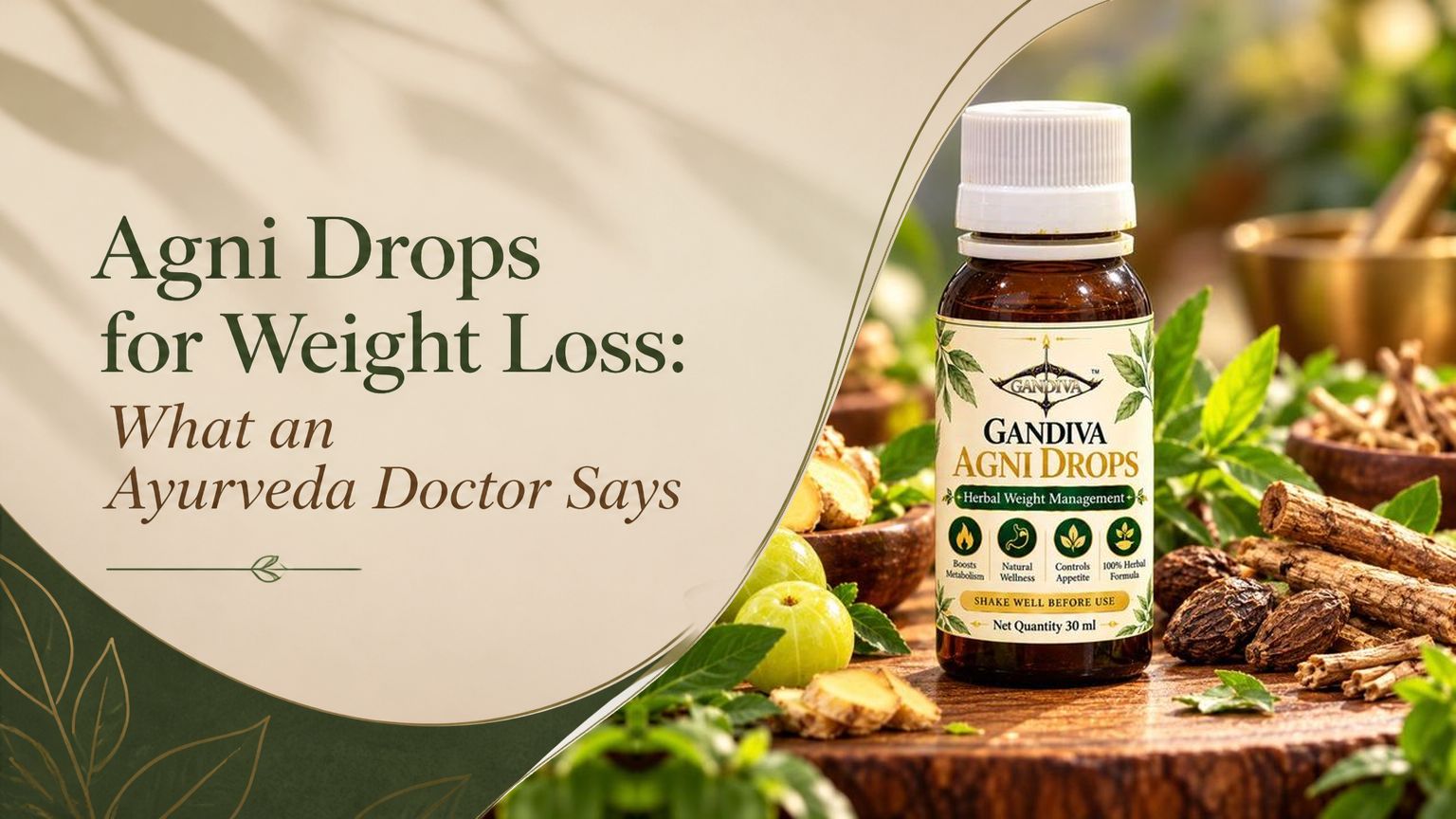
As a product category, Agni Drops are liquid herbal concentrates taken in small doses, usually in warm water, to support that digestive fire. The name is used across several Indian brands, from classical-recipe preparations to modern proprietary blends. Look at Gandiva Agni Drops – Dr. Madhusudan's 30 ml Ayurvedic weight drops and you see the category standard: a compact 30 ml bottle, plant-based ingredients prepared in a clinic, and a dosage built around meals. If the concept is new to you, learn about Agni and Ayurvedic digestive fire before you shop — it makes every label easier to read.
How Agni Drops Are Claimed to Work for Weight Loss
Most weight-loss drops, Agni Drops included, are not marketed as fat burners. The stated mechanism is metabolism-first: strengthen agni, reduce kapha and meda (the tissue associated with fat), clear ama, and let appetite and digestion normalise. In practice the claims translate to less bloating, lighter digestion after meals, fewer sugar cravings and a gradual reduction in belly weight. Whether every claim holds up is a separate question, and we get to it below.
What is often missed is the liver and thyroid connection. Ayurveda links efficient fat metabolism to a well-functioning yakrit (liver) and balanced thyroid output; if either is sluggish, no herbal drop carries the full load. That is why we often pair digestive support with Yakritamrit Ayurvedic liver support formula rather than expecting one bottle to do everything. The honest framing: drops are designed to support digestion and metabolism, and the meaningful change comes from what you eat, when you eat it, and how you move. Anyone promising kilos per week from drops alone is selling, not practising.
Ingredients Commonly Found in Agni Drops
There is no single universal recipe, but the herbal cast across Agni-type drops is consistent. Chitrak (Plumbago zeylanica) and Pippali (long pepper) are the classic deepana herbs used to kindle agni. Triphala — Amalaki, Bibhitaki and Haritaki — supports regular elimination. Nagarmotha (Cyperus rotundus), Musta and Kutki address sluggish digestion and water retention. Guggul is traditionally used for meda metabolism, while Sunthi (dry ginger), Ajwain and Hingu handle gas and bloating.
The ingredient list alone is not enough; the details around it matter more. Look for full botanical names rather than proprietary-sounding blends that hide quantities. Confirm the manufacturing licence number, batch number and manufacturer address on the label — state drug licensing authority permission is the minimum standard for an Ayurvedic proprietary medicine in India. Check the base liquid too: some drops use sesame oil, others a spirit or honey base, which changes taste and suitability for people with acidity. New to herbs? Ayurvedic herbs and ingredients explained is a straightforward starting point.
Evidence Review: Do Agni Drops Actually Help Weight Loss?
Let us separate mechanism from evidence. The mechanism — improving digestive efficiency through deepana-pachana herbs — is well established in Ayurvedic pharmacology. Product-specific evidence is thinner. There is no published randomised controlled trial on any single branded bottle of Agni Drops. What exists is broader work: a 2025 multi-centric clinical trial in the Journal of Natural Remedies on Ayurveda compound formulations in Sthoulya (obesity) management, and a review in the Journal of Drug Research in Ayurvedic Sciences on evidence-based Ayurveda interventions for sustainable obesity outcomes. Both suggest Ayurvedic protocols can support weight management when formulation, diet and routine are standardised.
Safety evidence deserves equal weight. The U.S. FDA states plainly that there are no FDA-approved Ayurvedic products and has found heavy metals — lead, mercury and arsenic — in multiple products, sometimes with undeclared strychnine and brucine. In India, a 2025 audit in the Journal of Drug Research in Ayurvedic Sciences screened Delhi media for a month and logged 1,198 misleading anti-obesity claims; 67% related to Ayurvedic products and none carried verifiable evidence. Against that, an AIIMS–CCRAS study on Arjuna and Arogyavardhini Vati shows what rigorous Ayurvedic research looks like. Read the manufacturer, not the promise — see how we work at About Dr. Madhusudan and Samayra Healthcare clinic and what patients report in the real patient testimonials.
How to Use Agni Drops: Dosage and Timing
Dosage is where most people go wrong. The instruction for our formulation is simple: Agni Drops dosage: 15 drops in warm water before meals. Before meals, not after — the aim is to prime agni before food arrives rather than chase digestion afterwards. Take it 15 to 20 minutes before lunch and dinner, in warm rather than cold water, and be consistent. Ayurvedic drops work cumulatively; skipping days and doubling the dose later does not help.
What should you expect realistically? Digestion improves first — less heaviness, less bloating, more regular bowels — usually within two to three weeks. Changes in waist measurement follow those digestive changes, not the other way around, and they are gradual. Track waist circumference and post-meal comfort rather than daily scale numbers. Keep the bottle out of direct sunlight, keep the dropper clean, and if you miss a dose simply resume at the next meal. If you take prescription medicine for diabetes, thyroid or blood pressure, do not start drops on your own — the timing and dose must fit your existing treatment plan.
Side Effects, Safety and Drug Interactions
Herbal does not automatically mean harmless. The most common complaints with digestive-fire drops are loose stools, a burning sensation in the stomach, mild nausea or increased acidity — usually a sign the formulation is too heating for your constitution or the dose is too high. Chitrak and Pippali in particular can irritate a sensitive gut. If you are pregnant or breastfeeding, avoid these drops; safety in pregnancy has not been established for most proprietary herbal concentrates. The same caution applies to children, active gastric ulcers, and liver or kidney impairment.
Drug interactions are the bigger blind spot. Herbs that influence blood sugar can amplify diabetes medication and push glucose too low. Guggul and certain bitter herbs can interfere with thyroid replacement and anticoagulants. This is why we ask for a full medication list before recommending anything. It also helps to read regulatory language correctly: India's Ministry of Ayush has stated it does not approve any Ayush drug or medicine, so phrases like "Ayush approved", "100% safe", "no side effects" or "guaranteed treatment" on a label are red flags, not reassurances. Unsure whether a formulation fits your case? Consult Dr. Madhusudan privately for personalised guidance before you begin.
Agni Drops Price in India and Where to Buy
For reference, Gandiva Agni Drops are priced at ₹999 for a 30 ml bottle — the typical size for a month's routine use at the standard dose. They are available from Shop all Gandiva Ayurvedic medicines, with UPI, card and net banking accepted, plain discreet packaging where nothing on the box indicates contents, and free delivery in 4 to 5 days anywhere in India.
When comparing prices across the category, compare value rather than the sticker. Work out cost per ml and cost per day, then check four things: a complete ingredient list with botanical names, a manufacturing licence and batch number, a manufacturer address you can verify, and a clear returns or refund policy. Marketplace listings with a stock photo, a vague "Ayurvedic formula" and no seller details are best skipped however attractive the discount. Buying from the maker — especially a clinic preparing formulations in-house — gives you someone to call about timing, dose or interactions, and that support matters more than a small saving on a bottle.
Agni Drops vs Other Ayurvedic Weight-Loss Options
Agni Drops are one option in a wider toolkit. Here is an honest comparison of the routes people most often weigh up.
If your weight connects to thyroid imbalance, Thyromrit capsules for thyroid and metabolism support is a more targeted route than digestive drops alone. Not sure which one fits your situation? Take the 3-question quiz to find the right Ayurvedic medicine — it takes under a minute and points you to the formulation that matches your concern.
Lifestyle Tips to Strengthen Agni Naturally
Drops work best when the routine supports them. Start with the simplest lever: warm water through the day, and never ice-cold drinks with meals — cold taken with food is one of the fastest ways to dampen agni. Eat your largest meal at lunch, when digestive capacity traditionally peaks, and keep dinner light and early. Avoid grazing; give the gut a genuine three to four hour gap so digestion actually completes.
Movement matters more than intensity. A ten to fifteen minute walk after meals has an outsized effect on post-meal heaviness. Add two or three strength sessions weekly if you can — muscle is metabolically active tissue and changes how your body handles calories at rest. Sleep and stress are the quiet saboteurs: poor sleep raises cortisol and appetite, and stress eating bypasses every herbal support you pay for. Ayurveda also favours kitchen-level help — dry ginger, ajwain, cumin and turmeric in daily cooking. For grounding, lifestyle and dietary tips from Ayurveda covers the basics in plain language.
Expert Insights: What an Ayurveda Doctor Checks First
In our clinic, no one is prescribed a weight-loss drop as the first step. We look at three things: how agni actually behaves (appetite, bloating, bowel regularity, post-meal heaviness), whether the liver and thyroid are carrying their share of the load, and what the patient's food and sleep routine realistically looks like. Nine times in ten, the biggest early win comes from correcting meal timing, not adding a bottle.
Three recommendations we give consistently. Treat drops as a support layer for eight to twelve weeks, not a weekend experiment. Measure the right things — waist circumference, digestion quality and energy, not just the scale. And stay sceptical of any claim promising rapid, guaranteed kilo loss without dietary change; the 2025 advertising audit cited earlier found those exact phrases lacked verifiable evidence. Root-cause thinking is slower, and it lasts.
Conclusion
Agni Drops for weight loss make sense as one piece of a larger plan — a plant-based, doctor-led layer supporting digestion, metabolism and the slow reduction of belly weight. Evidence for individual branded drops is still developing, so read labels carefully, ignore the guaranteed language, and expect gradual change rather than dramatic numbers. Ayurvedic proprietary medicines are not a substitute for a doctor's advice. If you want a formulation matched to your body rather than a bestseller, book a private Ayurvedic consultation before starting Agni Drops.
FAQ: Agni Drops for weight loss
What are Agni Drops for weight loss?
Agni Drops are liquid Ayurvedic herbal concentrates designed to support digestive fire, metabolism and gradual weight management, typically taken in warm water before meals. They are a support formulation, not a fat-burning medicine.
How do I take Agni Drops?
The standard instruction is 15 drops in warm water before meals, roughly 15 to 20 minutes before lunch and dinner. Follow the label of the specific product you buy, and never double up after a missed dose.
How long do Agni Drops take to show results?
Most people notice digestive improvements in two to three weeks, with waist changes following more gradually over eight to twelve weeks of consistent use alongside diet and movement.
Are Agni Drops safe?
They are generally well tolerated when used as directed, though loose stools, acidity or nausea can occur. Avoid them in pregnancy and breastfeeding, and consult a doctor first if you take medication for diabetes, thyroid or blood pressure.
Are Agni Drops approved by AYUSH or the FDA?
No. India's Ministry of Ayush has clarified that it does not approve any Ayush drug or medicine, and the U.S. FDA states there are no FDA-approved Ayurvedic products. Verify the manufacturing licence details on the label instead.
Where can I buy Agni Drops in India?
Gandiva Agni Drops (30 ml, ₹999) are available at drmadhusudan.com with plain packaging and free delivery in 4 to 5 days anywhere in India. For queries, contact the Delhi clinic for queries on Agni Drops via the website.
Can Agni Drops replace diet and exercise?
No. Drops are designed to support digestion and metabolism; sustainable weight management still depends on meal timing, food quality, movement and sleep.
Disclaimer: Ayurvedic proprietary medicines are not a substitute for a doctor's advice. Please consult a qualified practitioner before starting any new formulation.
OptionDesigned to supportBest suited forPair withAgni Drops (₹999, 30 ml)Digestive fire, metabolism, belly weightSlow digestion, post-meal heavinessMeal timing and movementTriphala churnaRegular elimination, gut cleansingConstipation, irregular bowelsWarm water at bedtimeGuggul-based formulationsMeda (fat) metabolismWeight with sluggish lipid profileDoctor-supervised dosingThyromrit (₹1,350, 60 caps)Thyroid and metabolism supportWeight linked to thyroid imbalanceThyroid monitoringYakritamrit (₹1,450, 60 caps)Liver support, fat metabolismWeight with sluggish liverDiet reviewLifestyle correctionRoot cause of calorie imbalanceEveryoneNothing works without it